Modular Construction: The Industrialized Building Revolution
Modular construction is the precision-engineered process where structural building elements and 3D volumetric steel modules are manufactured in a climate-controlled factory environment, then seamlessly connected on site. Eliminating weather delays and cost overruns, it delivers up to 50% faster completion with guaranteed budget certainty and near-zero construction waste.
Two Primary Structural Approaches in Modular Construction
Industrial offsite manufacturing offers 2D panelized and 3D volumetric solutions tailored to project scale and logistics.
2D Panelized Framing Systems
Two-dimensional planar wall, floor, and roof panels pre-assembled in the factory with framing, insulation, and linings. Shipped as flat packs and quickly locked together on site. Optimized for narrow urban access and long-haul shipping.
- Kompakt lojistik ve deniz aşırı taşımada minimum navlun hacmi
- Dar şehir içi arsalarda vinçle kat kat yükselme imkanı
- Tesisat hatları ve ıslak hacimler sahada birleştirilir
3D Volumetric Structural Steel Modules
SERMODULA's flagship core competence. Rigid 3D steel volumetric boxes where rooms, bathrooms pods, MEP infrastructure, and internal finishes are up to 95% completed in the factory. Erected and interlocked on foundation slabs in only 2 to 4 days.
- %95 Fabrikada bitmiş mekanlar: Banyo, mutfak, elektrik ve parke dahil
- Sahada sadece 2 ila 4 günde anahtar teslim kaba kurulum
- Modüller arası hava boşluklu çift karkas ile üstün akustik (Rw ≥ 58 dB)
McKinsey Global Institute Report: The Global Construction Revolution
McKinsey's landmark October 2024 global report reveals how traditional construction productivity has stalled, establishing industrialized modular construction as the primary catalyst for economic transformation.
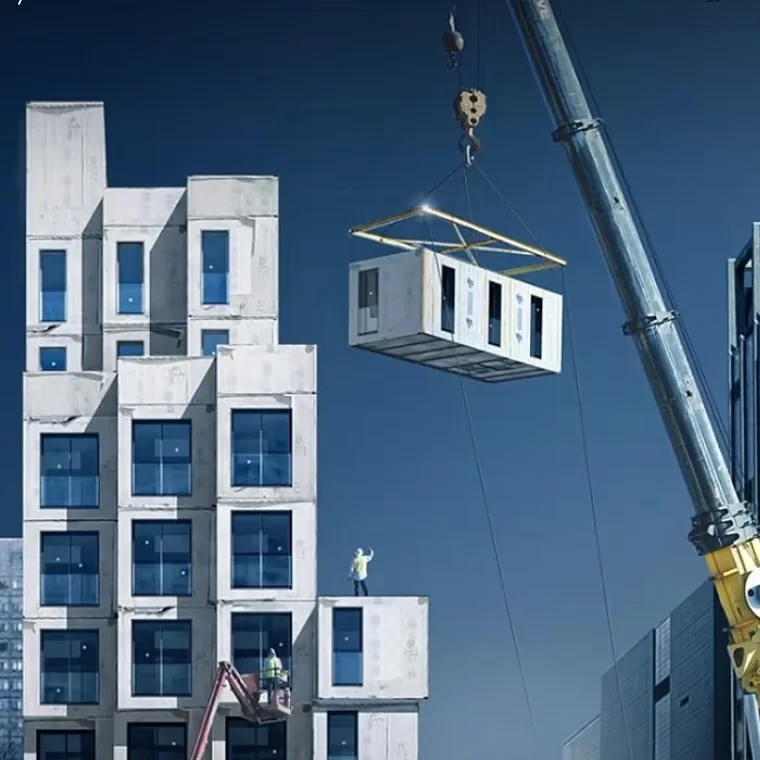
Up to 95% factory-completed 3D volumetric steel modules crane-hoisted and interlocked within hours on site.
$13 Trillion Sector Scale vs. 10% Productivity Gain
Representing $13 trillion in annual value, construction is one of the world's largest economic sectors. Yet labour productivity rose just 10% from 2000 to 2022 (compared to 50% across the global economy and 90% in manufacturing). Modular offsite production closes this productivity gap.
Global Housing Deficit: 3 Billion People by 2030
According to UN data, approximately 3 billion people will struggle to find adequate, safe, and affordable housing by 2030. Scalable, industrialized modular steel building is the only methodology capable of delivering housing stock at the necessary pace.
The Transformative Power of Offsite Pre-Assembly
Manufacturing 2D panels or 3D modules offsite under tight millimetric tolerances eliminates weather dependencies, shortens construction sequences, and drastically cuts volatile on-site labour demands.
Concurrent Workstreams Yielding Up to 40% Time Savings
In traditional construction, superstructure works must wait until foundation curing finishes. Modular methodology executes site groundworks and factory module manufacturing concurrently, compressing the overall development schedule by 40% to 50%.
2040 Target: $1.1 Trillion Global Modular Market
McKinsey projects that modular construction will expand at a 6% to 10% compound annual growth rate (CAGR) through 2040, reaching an estimated $1.1 trillion global market value. Forward-looking institutional developers gain prime competitive advantage.
Decarbonization: Addressing the Sector's 37% Emissions
Buildings and conventional construction activities are responsible for 37% of global carbon emissions. Factory-controlled raw material optimization, 100% recyclable structural steel, and near-zero construction waste turn modular building into an ESG cornerstone.
From Cell to Whole: Le Corbusier & The Genetic Code of Modularity
"Modularity is never a compromise on aesthetics. A century ago, Le Corbusier declared and proved through built work that modular logic and architectural beauty are fundamentally intertwined."
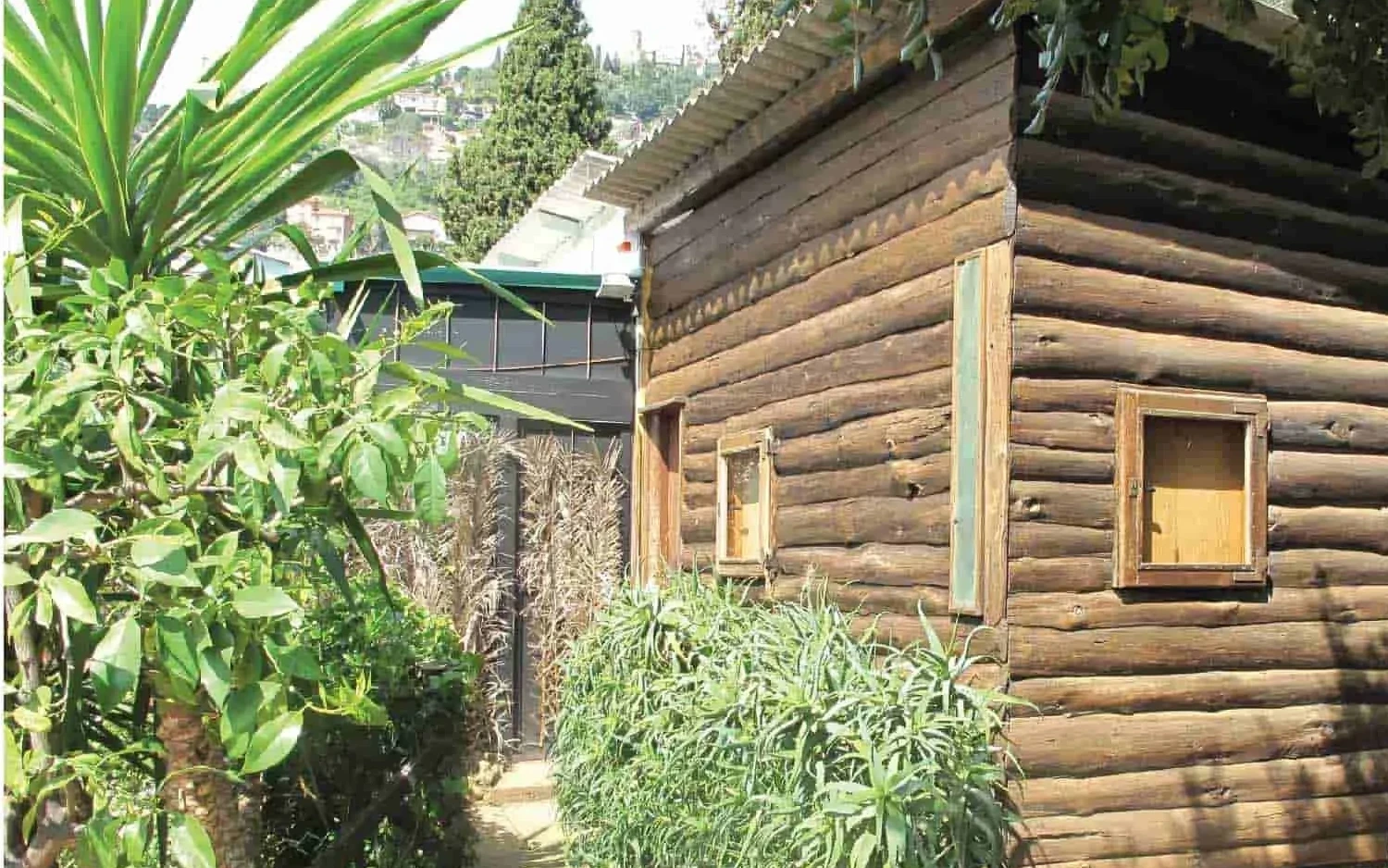
Modern architecture master Le Corbusier created the foundational DNA of residential space typologies with Le Cabanon (1951) in Roquebrune-Cap-Martin. Sized at just 3.66 x 3.66 meters and designed around his proportional Modulor scale, it proved that extreme spatial compactness can deliver unparalleled functional harmony and human well-being.
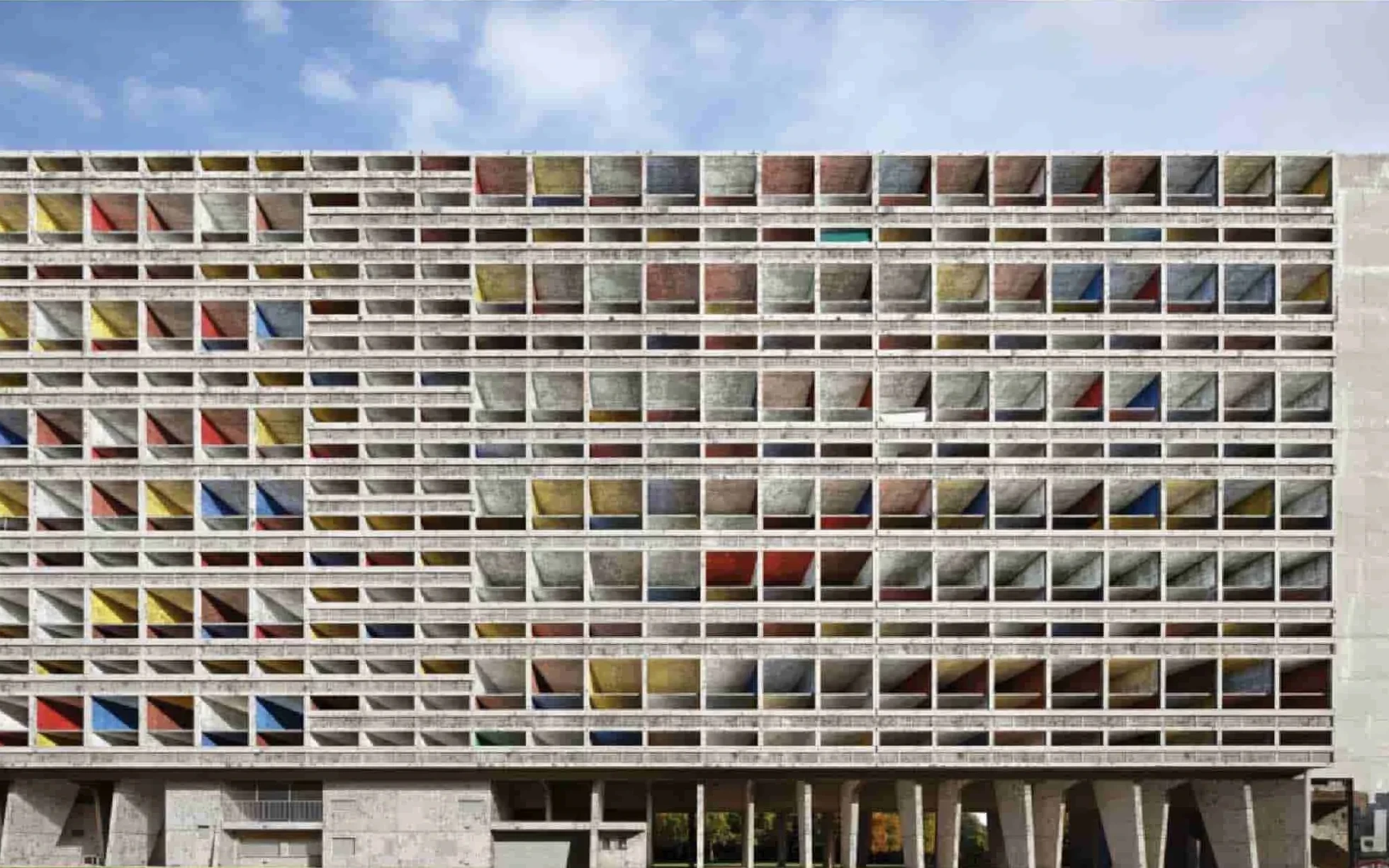
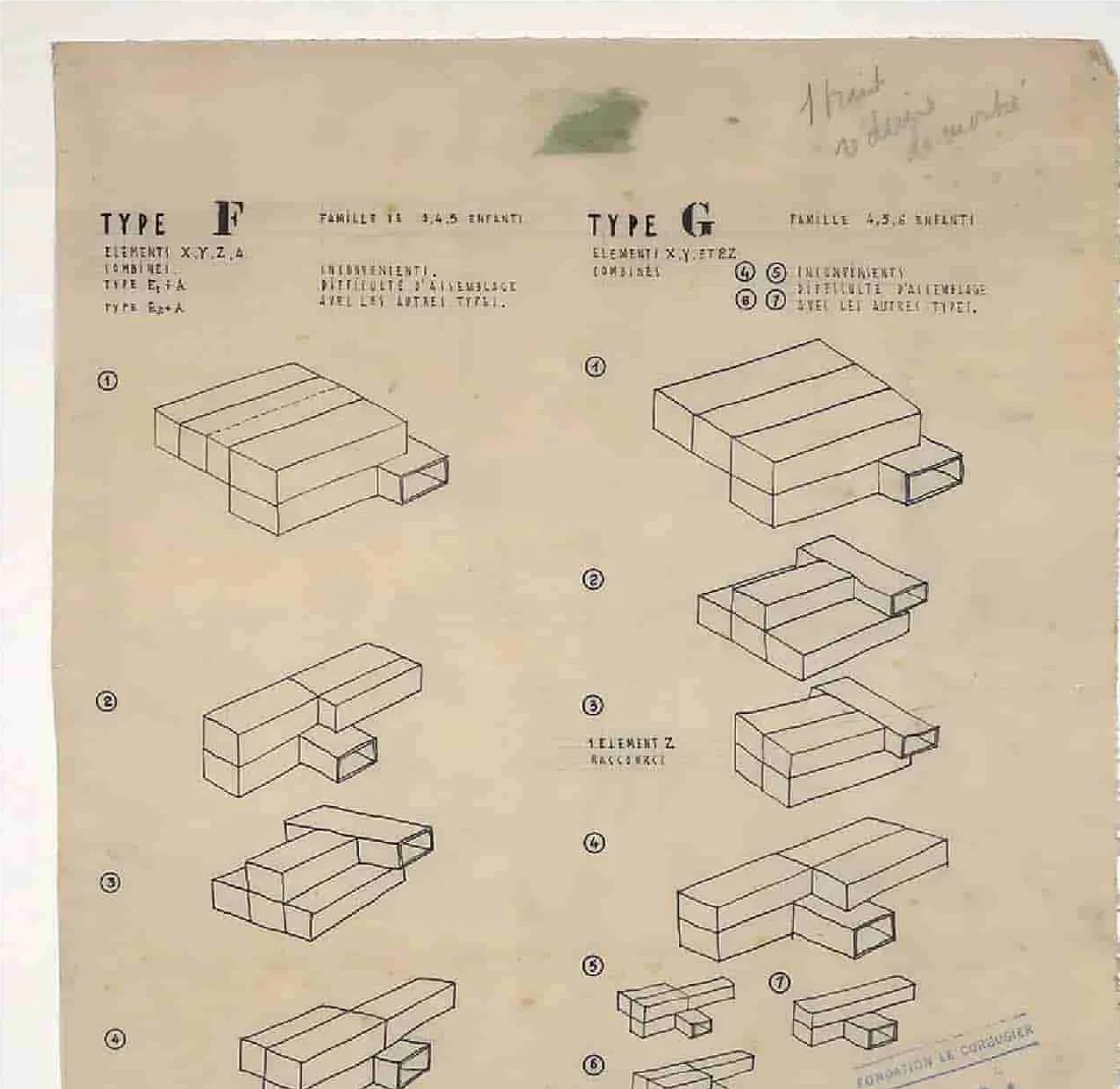
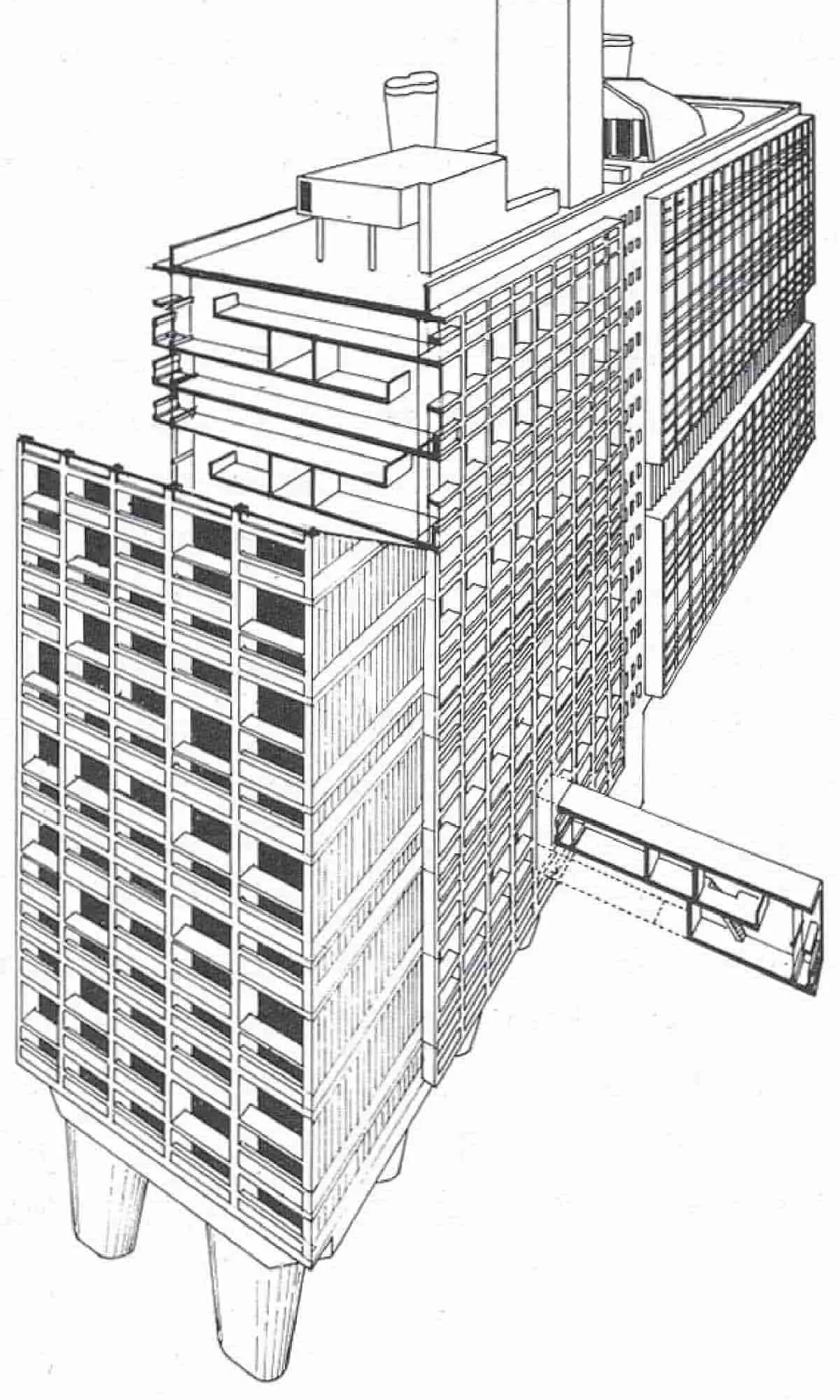
Scaling this concept to high-density living, his celebrated Unité d’Habitation (Marseille, 1952) treated the building as a structural grid into which pre-dimensioned modular living units (Type F and Type G) were slid like wine bottles into a rack. This visionary philosophy directly powers SERMODULA's 3D volumetric steel systems: "Let us turn to economical forms like Mother Nature. Pure geometric forms are beautiful because they are easily grasped."
Building Like Automotive Manufacturers: The DFMA Philosophy
Traditional building takes place in muddy, weather-exposed open-air sites subject to unpredictable human error. SERMODULA transplants the automotive industry's lean assembly lines, robotic automation, and DFMA (Design for Manufacture and Assembly) principles straight into building engineering.
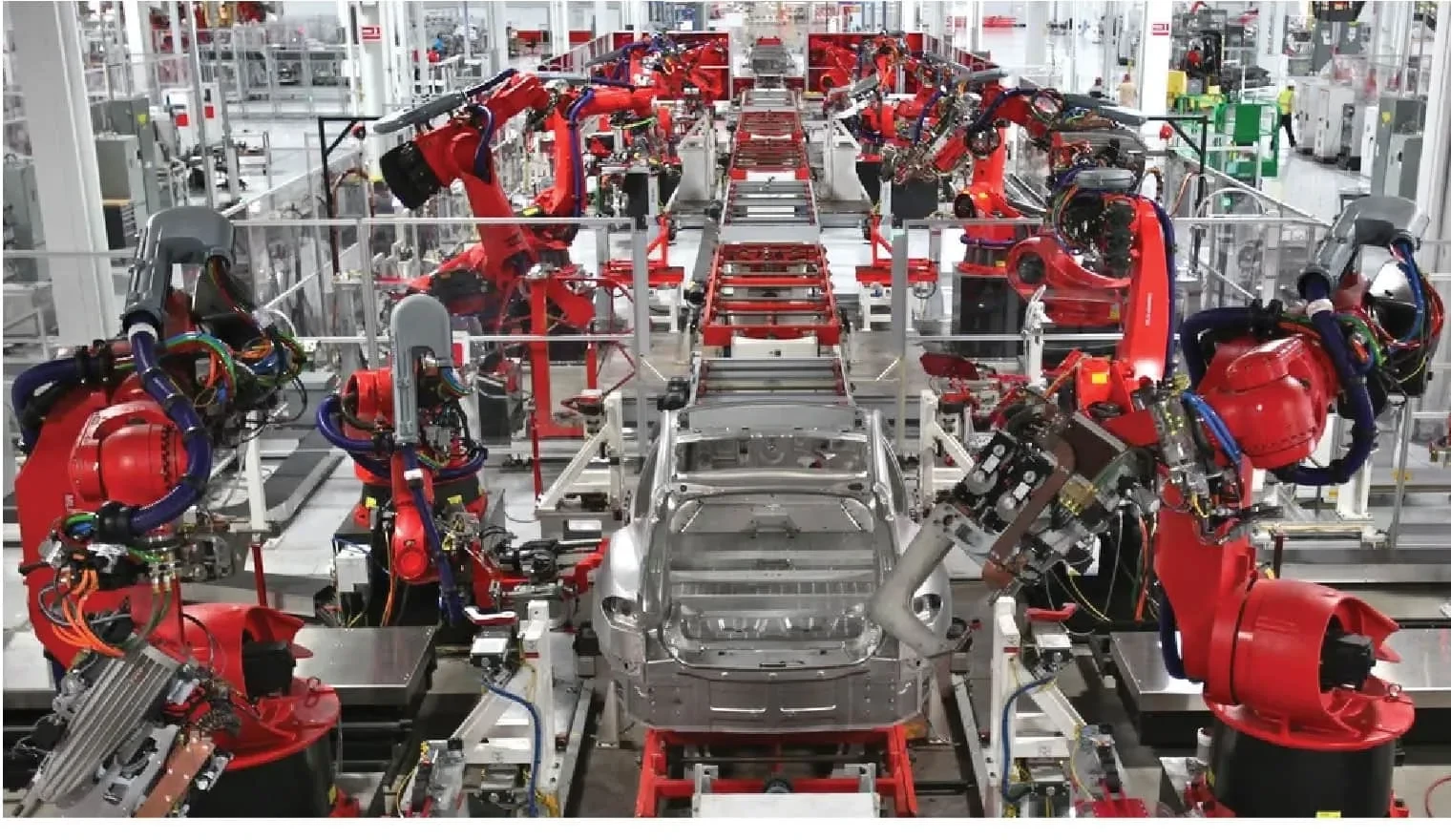
Robotic precision tooling, sub-millimeter tolerances, and zero-defect quality control.
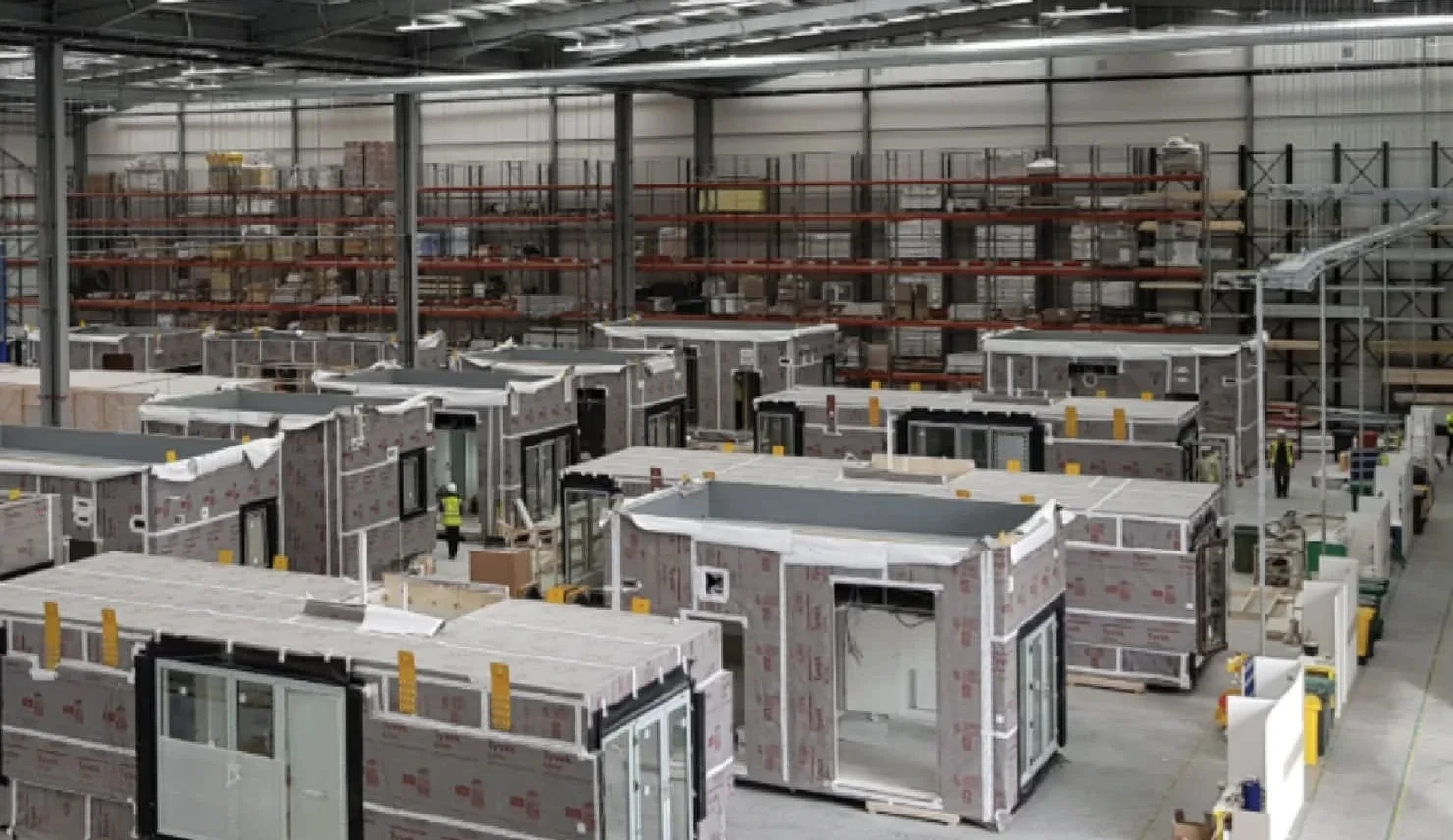
Indoor climate-controlled parallel manufacturing of steel frame, MEP, and finishes.
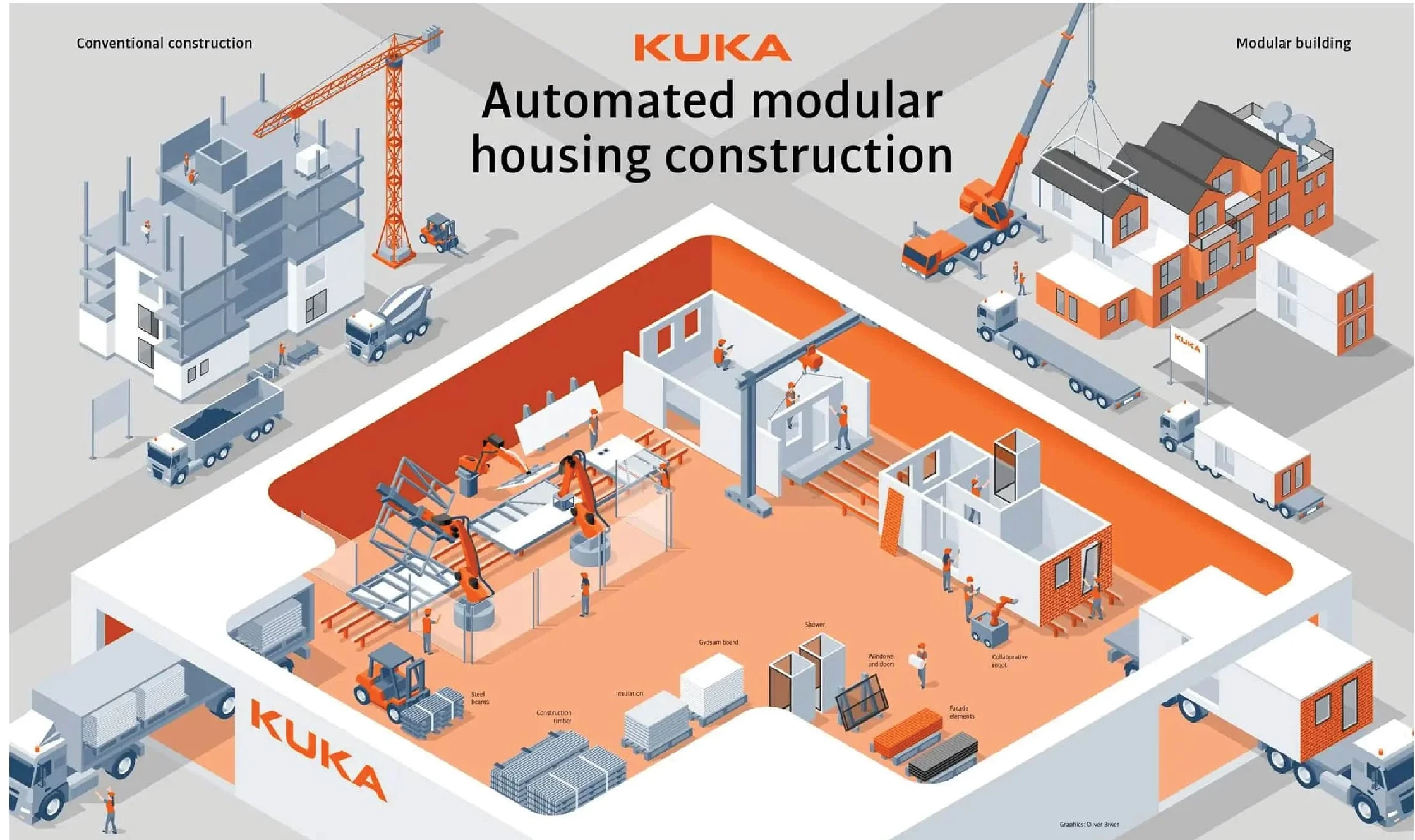
Left: Conventional sequential site complexity; Center: Robotic factory flow; Right: Rapid on-site modular installation.
S275/S355 structural steel hollow sections are CNC laser-cut and welded in precision alignment jigs with ±1.5 mm tolerance under EN 1090-2 EXC3 standards.
A1 non-combustible rockwool (REI 90/120) and decoupled cavity party-walls (Rw ≥ 58 dB) applied under dry indoor conditions, guaranteeing zero thermal bridges.
Pressure-tested plumbing manifolds, underfloor heating coils, smart wiring corridors, and finished bathroom pods installed and tested 100% prior to dispatch.
Positioned on foundations via mobile crane, modules are bolted via structural interlocks. Utility connections click into place like Lego blocks in 2 to 4 days.
Traditional In-Situ Concrete vs. SERMODULA Modular Steel
8 temel mühendislik ve proje yönetim kriterinde karşılaştırmalı fizibilite analizi.
| Engineering Criterion | SERMODULA Volumetric Steel | Traditional In-Situ Concrete |
|---|---|---|
| Total Delivery Timeline |
4 - 12 Weeks (Concurrent site & plant)
|
12 - 24 Months (Sequential in-situ phases)
|
| Cost & Budget Predictability |
100% Fixed Contract Price (Zero overrun)
|
20% - 35% Typical cost escalation & claims
|
| Weather & Seasonal Disruption |
Zero Impact (Climate-controlled factory)
|
Prolonged freeze, rain & heat stoppages
|
| Quality Control & Tolerances |
±1.5 mm Millimetric laser tolerance (EN 1090-2 EXC3)
|
±15 to 30 mm In-situ pouring discrepancies
|
| Earthquake Safety & Ductility |
60% Lighter dead load, ductile Eurocode 8 behavior
|
Heavy dead weight amplifying seismic forces
|
| Acoustic Sound Insulation |
Rw ≥ 58 dB (Decoupled double frame & air gap)
|
Rw ≈ 48 - 52 dB (Flanking transmissions & rigid bridges)
|
| Net Usable Area Efficiency |
+5% to 8% Greater internal usable area (Slim high-strength walls)
|
Floor area lost to thick columns and heavy shear walls
|
| Construction Waste & ESG |
90% Waste reduction, 100% recyclable structural steel
|
Tens of tonnes of timber formwork waste, concrete slurry & debris
|
Frequently Asked Questions on Modular Construction
What is the primary difference between modular and traditional construction?
Is the structural lifespan of modular steel buildings equivalent to traditional construction?
How resilient are volumetric steel modules against earthquakes and seismic activity?
Are modular buildings architecturally bespoke or restricted to generic rigid boxes?
What is the actual assembly duration on the plot once modules leave the factory?
How are freight logistics, European shipping, and customs clearances managed?
Modüler Yapı Projenizi Birlikte Hayata Geçirelim
Arsanızın konumunu, hedeflediğiniz konut tipolojisini ve proje büyüklüğünü belirleyin; online maliyet hesaplayıcımızla anında bütçenizi görün veya doğrudan mühendislik ofisimizden resmi teklif talep edin.